
How to Choose a Good Oval Diamond?
Oval diamonds are admired for their elongated silhouette, soft curves, and elegant brilliance. Compared to round diamonds, they often appear larger at the same carat weight while creating a more slender, flattering look on the finger.
However, choosing an oval diamond goes beyond the 4Cs. Factors such as length-to-width ratio, the bow-tie effect, facet symmetry, light leakage, and overall light performance all play a vital role in its beauty. This guide covers the 4Cs, proportions, optical performance, setting styles, and diamond certificates to help you select an oval diamond that is truly brilliant and beautifully balanced.
Contents
The 4Cs of Oval Diamonds
Length-to-Width Ratio
Bow-Tie Effect
Dead Facets
Setting Styles
Diamond Certificates & Grading
Emotional Significance
Budget Considerations
Frequently Asked Questions (FAQ)
The 4Cs of Oval Diamonds
While oval diamonds are evaluated using the same 4Cs as all diamonds, their visual appeal is influenced even more by their proportions, facet arrangement, and light performance. When choosing an oval diamond, certification alone is not enough—it should also appear bright, well-balanced, elongated, and naturally elegant.
Cut : The Key to Brilliance
Unlike round brilliant diamonds, oval diamonds do not receive a standardized cut grade. Their cut quality should therefore be assessed through the diamond itself, high-resolution videos, or expert evaluation. A well-cut oval diamond should feature balanced proportions, good symmetry, excellent light return, and minimal bow-tie effect, dead facets, or light leakage.
From the face-up view, a high-quality oval diamond should display a graceful outline, even brilliance, and a smooth, elongated appearance—rather than a dark center, dull ends, or uneven light distribution.
Color : Elongated Shapes Reveal Color More Easily
Because of their elongated silhouette, oval diamonds may show body color more noticeably than round diamonds, particularly in larger carat sizes or when set in white metals. For a crisp, colorless appearance, D–F color grades are the preferred choice. G–H colors offer excellent value, though they should be evaluated alongside the actual diamond and its setting.
Clarity : Eye-Clean Matters Most
The brilliant faceting of an oval diamond can conceal many small inclusions, but inclusions in the center, dark crystals, or noticeable feathers may still affect its appearance. VVS2–VS1 is generally a safe range, while VS2–SI1 diamonds should be confirmed to be eye-clean, with no obvious inclusions in the center or highly reflective areas.
Carat : Visual Size Matters More Than Weight
Thanks to their elongated shape, oval diamonds often appear larger than round diamonds of the same carat weight. Instead of focusing only on carat, compare the diamond's actual length, width, proportions, and face-up appearance. Some diamonds carry more weight in their depth, making them appear smaller from the top. A well-proportioned oval diamond often delivers a larger visual presence and better overall value within the same budget.

Length-to-Width Ratio: The Key to an Oval Diamond's Beauty
The length-to-width ratio of an oval diamond directly influences whether it appears fuller, more balanced, or more elongated. Calculated by dividing the diamond's length by its width, this ratio is one of the most important factors in defining the overall appearance of an oval cut.
In general, a lower ratio creates a fuller, rounder look, while a higher ratio produces a more elongated silhouette that can make the finger appear slimmer and longer.
Common Length-to-Width Ratios
**1.20–1.29 | Full & Rounded**
A shorter, wider outline with a soft, rounded appearance—ideal for those who prefer a fuller, classic look.
**1.30–1.39 | Classic & Balanced**
A well-balanced proportion that retains the elegance of an oval shape without appearing overly elongated. A timeless and versatile choice.
**1.40–1.50 | Elegant & Elongated**
A more refined silhouette with enhanced finger-flattering proportions, offering a sophisticated and contemporary look.
**Above 1.50 | Long & Distinctive**
A noticeably elongated shape with a bold, modern character. While visually striking, it is important to ensure the diamond does not appear overly narrow or out of proportion.
There is no single 'perfect' length-to-width ratio for an oval diamond. The ideal choice depends on whether the outline appears natural, the symmetry is balanced, the curves flow smoothly, and the overall shape complements both the setting and the wearer's hand.

Bow-Tie Effect: An Optical Characteristic
The bow-tie effect is the dark shadow that appears across the center of an oval diamond. It occurs when light is not reflected efficiently due to the diamond's cut and proportions.
Severe Bow-Tie Effect
- Creates a noticeable dark center.
- Reduces brilliance and fire.
- Makes the diamond appear less lively.
Mild Bow-Tie Effect
- A natural feature of most oval diamonds.
- Should appear soft and subtle.
- Has little impact on the diamond's overall beauty.
A well-cut oval diamond minimizes the bow-tie effect, resulting in a brighter and more balanced appearance.

Check for Dead Facets at the Ends
When choosing an oval diamond, don't focus only on the bow-tie effect—pay close attention to the facets at both ends.
Look for Dark or Dull Ends
Some oval diamonds show dark, gray, or lifeless facets at the tips. This is commonly referred to as **dead facets** or **extinction at the ends**.
Watch for Light Leakage
If the ends appear pale, transparent, or glassy, they may be showing **light leakage**, meaning light is escaping instead of being reflected back.
Check for Crisp Facets
A well-cut oval diamond should have clear, well-defined facets that brighten naturally as the diamond moves. If the ends remain dark or dull, the diamond may appear less brilliant despite having good 4C grades.
Don't Rely on the Certificate Alone
In addition to the certificate and length-to-width ratio, always evaluate the facet pattern, light return, and whether the diamond shows noticeable dead facets or light leakage.

Ideal Setting Styles for Oval Diamonds
The right setting enhances both the beauty and brilliance of an oval diamond. Each style offers a distinct look and complements different design preferences.
Popular Oval Diamond Settings
Solitaire
- Showcases the oval diamond as the focal point.
- A timeless and elegant classic.
Halo
- Surrounds the center stone with smaller diamonds.
- Enhances brilliance and creates a larger appearance.
Three-Stone
- Symbolizes the past, present, and future.
- A meaningful and romantic design.
Pavé
- Small diamonds are set along the band.
- Adds extra sparkle and a luxurious look.
Bezel
- Encircles the diamond with precious metal.
- Offers a modern style with added protection.
Vintage
- Features intricate details and craftsmanship.
- Ideal for those who appreciate classic or artistic designs.
The right setting not only enhances the diamond's brilliance but also complements its overall appearance and style.

The Importance of Diamond Certification
A diamond certificate provides essential information, but the true beauty of an oval diamond should always be assessed through photos, videos, or in-person viewing.
Verify the Basics
A certificate confirms the diamond's carat weight, color, clarity, polish, symmetry, measurements, and certificate number, giving you confidence in its quality.
Evaluate Its Appearance
Certification alone cannot reveal how an oval diamond looks. Its proportions, bow-tie effect, dead facets, light leakage, and overall light performance all influence its visual appeal.
Choose a Trusted Certificate
Look for diamonds certified by reputable laboratories such as GIA or IGI, and always review high-resolution images or videos whenever possible.
Preserve Its Identity
A grading report provides a reliable record for future maintenance, insurance, resale, or valuation.

Emotional Significance
Beyond its elegant, elongated shape, an oval diamond represents love, commitment, and cherished memories, making it a meaningful piece to treasure for a lifetime.
A Symbol of Life's Milestones
Oval diamonds are a popular choice for engagement rings, anniversary gifts, and other meaningful occasions.
Elegant and Romantic
Compared to the classic brilliance of a round diamond, the oval cut offers a softer, more romantic character with a distinctive sense of style.
More Than a Diamond
Its true value lies not only in its carat weight or quality, but also in the memories, moments, and relationships it represents.
A Style That Reflects Your Story
With different settings and precious metals, an oval diamond can be timelessly simple or beautifully bold - making it a lasting expression of personal style and emotion.
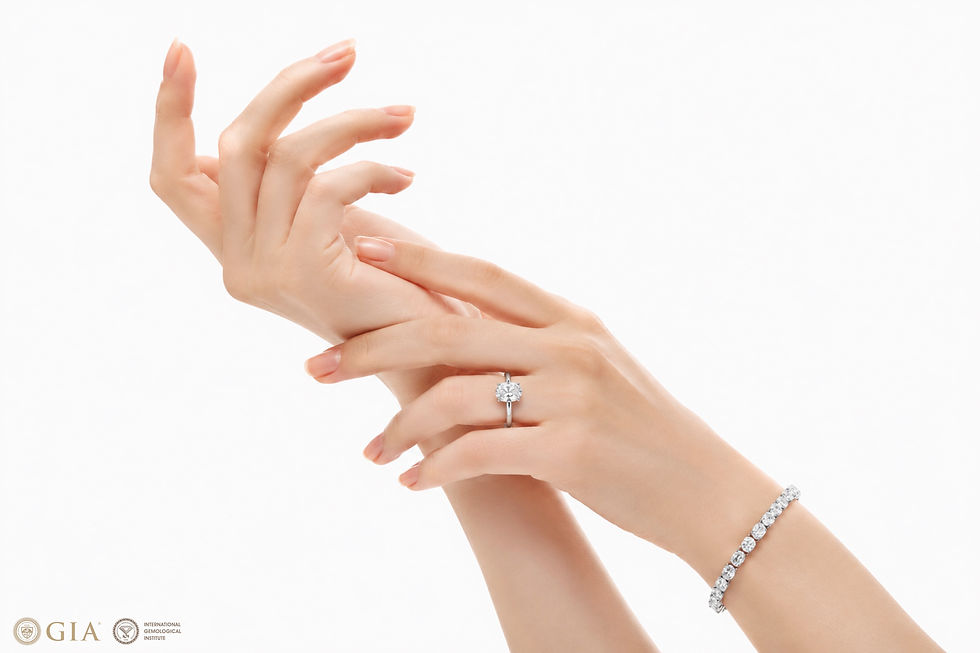
Budget Considerations
The price of an oval diamond depends on its 4Cs, proportions, light performance, and setting. Setting a clear budget helps you find the right balance between size, quality, and design.
Set Your Budget
Decide whether you value size, quality, or overall design most before making your purchase.
Balance Size and Quality
Oval diamonds often appear larger than round diamonds of the same carat weight, so proportions, brilliance, and visual appeal can be just as important as carat size.
Maximize Value
Choosing the right color and clarity grades—instead of always aiming for the highest grades — can help you find a bright, eye-clean diamond with excellent value.
Consider the Setting
The metal, setting style, and custom design all influence the final price. The right setting enhances both the diamond's beauty and your budget.

Frequently Asked Questions (FAQ)
Q1: What are the advantages of an oval diamond over a round diamond?**
Oval diamonds have an elongated shape that typically appears larger than round diamonds of the same carat weight. They also create a longer, more elegant look on the finger.
Q2: What is the ideal length-to-width ratio for an oval diamond?**
A ratio between **1.30 and 1.50** is generally considered the most attractive. Ratios of **1.30–1.39** offer a balanced look, while **1.40–1.50** create a more elongated appearance. Ratios above **1.50** can look striking but should remain well-proportioned.
Q3: Why are both a diamond certificate and visual inspection important?**
A certificate verifies the diamond's key characteristics, such as carat weight, color, clarity, polish, and symmetry. However, the beauty of an oval diamond also depends on its proportions, bow-tie effect, dead facets, light leakage, and overall light performance, making photos, videos, or in-person evaluation equally important.

Discover Your Ideal Oval Diamond.
Book a private consultation with RAGAZZA and let our diamond specialists help you find the perfect natural or lab-grown diamond, tailored to your budget and preferences.
Click Here to Explore Our Showrooms & Book an Appointment


