Do You Have to Kneel When Presenting a Diamond Engagement Ring? The History of One-Knee Proposals and Marriage Customs
Updated: 1 day ago
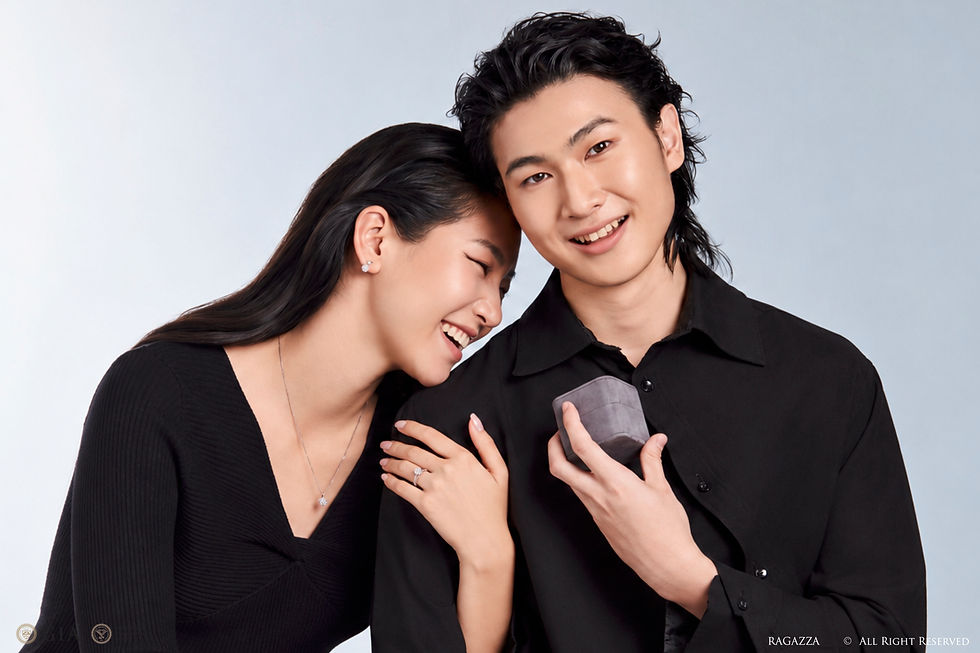
An open box reveals a diamond engagement ring. One person kneels while the other leans in to listen: this is one of the most recognisable scenes in a modern proposal. A deliberate gesture turns an ordinary moment into a lasting memory. Some people look forward to that sense of occasion; others imagine standing together, holding hands and speaking about their future. Both expectations connect with the cultures in which we grow up and the meaning we give to marriage.
Part of the appeal of a one-knee proposal is that affection becomes visible. The person proposing lowers their body, offers a ring and waits for an answer, placing their partner at the centre of the moment. Across the world, however, marriage is confirmed in many expressive ways. Chinese family proposals and betrothal gifts, Indian engagement ceremonies, marriage approaches in some Middle Eastern communities and European exchanges of rings each have their own history and emotional focus.
Exploring these customs reveals how the one-knee proposal became part of modern life. It also helps couples bring romance, family relationships and personal beliefs together in a moment that feels natural and considered.
Contents
1. The History and Romantic Meaning of the One-Knee Proposal
Body language, respect and affection
Kneeling carries different meanings in different relationships. In religious ceremonies it can express worship; in courts and feudal societies it has signalled allegiance; in family rituals it often conveys gratitude and respect between generations. A romantic proposal draws on this expressive body language to turn everyday companionship into a distinct moment of commitment.
The one-knee proposal is often associated with medieval knights and courtly love. A knight kneeling before a lord, or a lover showing deference to a beloved, provides a familiar cultural image. The historical connection between those gestures and marriage proposals is less complete. Historian Emily Brand notes that clear evidence linking kneeling specifically to proposing marriage remains limited before the nineteenth century.[1]
What makes this history interesting is how a gesture changes with the relationship. Kneeling before an authority can communicate submission; kneeling before a partner can voluntarily express affection and vulnerability. Modern couples can give the gesture their own meaning within the marriage they hope to build.

How film made the proposal a familiar scene
The 1925 silent film Seven Chances already featured a proposal on one knee.[1] Films, novels and romantic stories subsequently returned to a similar sequence: a ring, a serious question, a brief wait and an answer. Research by Hoplock and Stinson also discusses how people learn this familiar proposal script through film, books and stories told by others.[5]
The combination of a bent knee and an open ring box is immediately legible. Even without hearing the words, an onlooker can understand the scene. Social media has brought that image from the cinema into the lives of friends and relatives, making the proposal a personal memory that can be planned, photographed and shared. The occasion belongs to the couple while also carrying the romantic expectations of those around them.

2. Chinese Marriage Customs: Family Proposals and Personal Commitment
The Six Rites connect two families
Traditional Chinese marriage places considerable importance on the relationship between two families. The Six Rites encompass the initial proposal, asking for the bride's name, divination, betrothal gifts, choosing the wedding date and the groom's reception of the bride. In the first stage, nacai, the groom's family sends a matchmaker to communicate its wish to form a marriage alliance.[2] Exchanges of information, gifts and arrangements gradually establish the engagement within the family network.
In this setting, seriousness is expressed through etiquette, family participation and preparations for the couple's future. The betrothal gift ceremony still familiar in Hong Kong, often called guo da li, is connected with the traditional gift-giving stage. Kneeling to serve tea to parents expresses gratitude and the importance of family relationships.[3]
The direction of the gesture matters. At a tea ceremony, the couple faces parents and elders; during a one-knee proposal, one partner faces the other. The tea ceremony places the couple within a relationship between generations, while a private proposal lets them directly affirm their choice. A modern marriage can make room for both a personal promise and a family's blessing.
Romantic proposals in contemporary Chinese life
As personal feelings have gained a stronger place in courtship, many couples have come to value a distinct romantic proposal. In a 2022 discussion of research on young people in Guangzhou and interviews with twenty recently married young couples, researcher Pei Yuxin describes the importance participants placed on preparation, presentation and ceremony, alongside the influence of film and social media.[4]
A couple may already have agreed on a wedding date, or even be organising a banquet, and still look forward to a formal proposal. The occasion gives emotional expression a place alongside practical arrangements. Many people may help prepare a wedding, while the decision to share a life together remains something partners can voice to each other.
A private proposal, an approach to the families, the exchange of betrothal gifts and the wedding can therefore fulfil different roles. The one-knee proposal creates a memory for the couple; family ceremonies bring that decision into a wider household life. Their coexistence gives contemporary Chinese marriage customs much of their depth.
3. Rings and Proposals in Britain, America and Western Europe
Taking the initiative and waiting for an answer
The familiar proposal in British and American popular culture often has a man plan the occasion, present a ring and kneel while a woman responds. The person proposing takes the initiative but also faces the uncertainty of speaking, waiting and possibly being refused. The person receiving the proposal makes an important response within a moment of surprise.
That tension makes a proposal a natural climax in a love story. Two people who know each other well are reminded, in a few seconds, of how much the relationship matters. A ring and a kneeling gesture help mark the occasion, while the understanding developed beforehand gives the moment its foundation.
An engagement can also involve exchanging rings
European engagement customs place emphasis on different forms of commitment. In Sweden, for example, a wedding planner interviewed by The Local describes the custom of both partners exchanging engagement rings.[6] With each person wearing a ring, engagement becomes a visible promise shared by both.
This has a different emotional focus from the scene in which only a woman receives a diamond engagement ring. One centres an offering on the person being proposed to; the other gives both partners a visible sign of their promise. Couples can also combine the two, arranging a private proposal before choosing engagement or wedding rings together.
4. Family Witnesses in Eastern Europe and Russia
The history of engagement in Eastern Europe also preserves the importance of relatives and communities witnessing a promise. The Polish Ethnographic Atlas records local practices involving the joining of the couple's hands and the exchange of rings or other tokens.[7] Joined hands and exchanged objects make a spoken agreement something that others can see and remember.
In traditional Russian marriage arrangements, matchmakers and parents commonly approached the other family, first establishing interest and then arranging formal discussions.[8] These procedures connected the marriage agreement with future household life. The participation of elders and the reception of each partner within the families carried considerable weight.
A contemporary romantic proposal can create a private space alongside these family traditions. A ring, a bent knee or a promise spoken directly allows personal affection to be expressed clearly, while family meetings and the wedding continue to carry the blessing of relatives and friends. Personal and family occasions can complement each other within the same marriage.
5. Family Approaches and Marriage Agreements in the Middle East
An engagement and a marriage contract have distinct roles
In some Muslim communities in the Middle East, a formal approach and contact between families are important stages towards marriage. Religious guidance describes approaches made by a man himself, together with relatives or through a representative to the woman's guardian, followed by discussions according to local custom.[9] Serious intent is expressed through a clear proposal, the wishes of those involved and plans for the future.
These arrangements give both families a defined place. Getting to know a prospective spouse, becoming engaged and entering a marriage contract also have different meanings. Egypt's Dar al-Ifta explains engagement as a promise to marry, distinct from the marriage contract itself.[10] A romantic proposal can be an important emotional memory, while formal marriage has its own procedures.
Affection within a life of faith
Faith can also shape how partners express physical closeness. Dar al-Ifta's guidance on engaged couples sets boundaries around kissing and physical contact before the marriage contract.[11] The location, witnesses, placement of a ring and any kiss are therefore best considered alongside the couple's religious life.
A carefully prepared proposal can express commitment through words, a meaningful token, family blessings or appropriate witnesses. When the occasion fits the way the couple intends to live, romance takes a form that is closely connected with their relationship.
6. Family Arrangements and Romantic Proposals in India
Where personal choice and family recognition meet
Family involvement and personal feelings can develop together in Indian marriage. A study published by Reed in 2025 draws on interviews with forty-eight college-educated, middle-class people in the New Delhi region, including young adults, spouses and parents. It examines how North Indian engagement ceremonies connect individual choice with family recognition.[12]
Partners introduced by their families may develop affection during the period after engagement. Couples who began their relationship independently may use a family engagement ceremony to bring wider recognition to their choice. The formation of a marriage can therefore involve different rhythms of emotional development, family discussion and social acknowledgement.
A one-knee proposal after the match is settled
Bhandari's study of India's urban middle classes, published in 2026, records couples arranging a ring and a one-knee proposal even after their marriage had already been agreed. The author examines these romantic expressions in the context of consumption, media and middle-class identity.[13] For the couple, the occasion can affirm that their marriage also grows from personal affection and a deliberate choice of each other.
A private dinner, a meaningful location or a ring box opened during a trip gives an emotional focus to a wedding already being arranged. The family ceremony acknowledges the match; the private proposal places the relationship itself at the centre of the scene.

How social class shapes resources and presentation
A proposal can also carry the marks of social class. For families with greater resources, travel, private venues, professional photography and planning services create more possibilities for presentation. Family property, reputation and social networks may also make marriage arrangements a matter of more detailed negotiation.
In some urban middle-class settings, knowing how to arrange a proposal that peers recognise as romantic becomes a cultural resource in itself. Photographs, rings and venues record a relationship while also expressing the life a couple hopes to lead. Bhandari's research examines how such romantic practices help shape middle-class identity.[13]
Couples with tighter budgets can place their attention on familiar everyday locations, carefully chosen words and meaningful tokens. Class most directly affects the money, time and support available. How deeply a proposal touches a partner also depends on how closely its details connect with the couple's shared experiences.
Caste, religion and regional identity in India can intersect with family circumstances to shape partner selection and engagement arrangements. Looking beyond the romantic photograph reveals the people participating in the marriage and the relationships being affirmed.
7. Gratitude and Blessings in Southeast Asian Marriage Customs
Family blessings often have a clear ceremonial place in Southeast Asian marriage customs. Malaysia's Department of National Heritage describes Malay practices that unfold through stages of enquiry and formal proposal, with family and community participation.[14] The seriousness of the marriage is expressed in how the families approach and treat each other.
In some Javanese wedding ceremonies in Indonesia, sungkeman allows the couple to thank their parents and seek blessings for their future.[15] Kneeling or bowing low connects with gratitude for upbringing and respect between generations. In Thai weddings, water poured over the couple's hands conveys blessings for their married life.[16] Such gestures make the family's goodwill something the couple can experience directly.
The direction of a marriage approach also has local variations. Research on wedding customs in Pariaman, West Sumatra, records arrangements and gifts provided by the woman's family to welcome the groom.[22] Local kinship and marriage practices give the woman's family a distinctive role in taking the initiative.
These customs reveal how marriage connects affection with gratitude, kinship and community. Couples can preserve these ceremonies while also arranging a private proposal, allowing family blessings and personal feelings to have their own treasured place.
8. Royal Status and Women Who Propose
Queen Victoria took the initiative
Royal engagements show particularly clearly how social position can affect who proposes. On 15 October 1839, Queen Victoria proposed to Albert. As the reigning monarch, custom required her to take the initiative, an episode recorded in the Royal Family's timeline.[17]
Here, the person proposing was the Queen, and her position as sovereign shaped the arrangement. The history of proposals is richer than a single sequence in which a man asks and a woman answers. Who speaks first can change with the conventions of an era and its relationships of gender and status.
A royal can also propose on one knee
Modern members of royal families can also choose a familiar, private expression of romance. In their 2017 engagement interview, Harry and Meghan described his proposal on one knee at home.[18] Royal status and a gesture of lowering oneself to express affection coexisted naturally in that moment.
This highlights an expressive quality of romantic kneeling: the person proposing voluntarily directs attention towards a partner and allows the uncertainty of waiting for an answer to be seen. Wealth and status can shape marriage arrangements, while respect within an intimate relationship is expressed through voluntary commitment and response.
Women can give their feelings an active voice
Stories of women proposing are also preserved in newspapers and social memory. Materials discussed by the Library of Congress include the leap-year custom of women proposing and the story of suffragist Inez Milholland, who proposed to her partner in 1913.[19]
Today, either partner can initiate a proposal. Couples may propose to each other, exchange rings or organise a shared commemorative ceremony. When the initiative can be shared, both people have more room to give their feelings an active place within the occasion.
9. Men, Vulnerability and Public Proposals
Taking the initiative can involve vulnerability
Planning a proposal means turning feelings that may rarely be spoken into a clear invitation. For a man, choosing the ring and the moment, then kneeling to ask, may bring excitement, nervousness and uncertainty together. This vulnerability is part of the emotional force of a proposal: someone expresses their intention seriously and leaves room for their partner's answer.
Some people welcome the formality of a bent knee because the gesture helps them begin a difficult sentence. Others feel more comfortable sitting side by side and talking about their future. An occasion that fits the couple's personalities is easier to inhabit naturally. Where kneeling matters deeply to one partner, it can help to understand whether the hope behind it is for solemnity, a feeling of being cherished or a particular memory to preserve.
The different experience of public and private proposals
A public proposal makes friends and relatives witnesses, while placing both partners in front of an audience. Someone who enjoys a lively gathering may hear cheering as a blessing. A more private person may find it difficult to respond freely in front of cameras and applause.
In their analysis of online first-person accounts, Hoplock and Stinson found that rejected proposals more often involved circumstances such as marriage not having been discussed, unsuitable timing or a public setting.[5] For couples planning a proposal, the finding underscores the value of an earlier understanding. Having already discussed marriage still leaves the timing, location and words available as a surprise.
A thoughtful proposal also makes room for a partner's pace. After asking, allow a quiet moment. If more time is needed, both people can stand comfortably and continue the conversation. Consideration extends the romance beyond the instant of kneeling and into the response that follows.
10. A Natural and Comfortable One-Knee Proposal
A stable position makes the gesture easier
The basic one-knee position places one knee on the ground and the other foot flat in front, with the upper body comfortably upright. These points of support help maintain balance and make it easier to look towards a partner. Kneeling too close may make the other person step back or bend over; a comfortable distance lets both people concentrate on the words being spoken.
Either knee can be chosen according to habit and physical comfort. Paragraph 274 of the Catholic General Instruction of the Roman Missal specifies the right knee for genuflection in worship, within that particular religious ceremony.[20] For a private proposal, stability, knee comfort and being able to stand up easily are the practical priorities.
Kneeling on both knees has a more intense visual effect and, in some settings, may suggest pleading, worship or apology. One knee usually communicates the familiar contemporary proposal clearly. The weight of the occasion comes from the words, preparation and understanding between the couple.
Position | Visual and personal impression | Preparation |
One knee | A clear, deliberate proposal gesture | Keep the front foot flat, the upper body upright and a comfortable distance. |
Left or right knee | Choose the side that feels stable | Practise in the shoes you will wear and check that standing up is easy. |
Standing or sitting | Allows hand-holding and eye-level conversation | Choose a comfortable place, with attention on the words and ring. |
Give the longer speech before kneeling
Shared memories, gratitude and hopes for the future can be spoken while standing or sitting together. At the moment of asking, take out the ring box and lower onto one knee so that the gesture accompanies the invitation. After hearing the answer, stand naturally before placing the ring or embracing. This usually makes the sequence more comfortable and fluid than holding the position for a long speech.
Choose level, dry ground with enough room for both people to stand, kneel and rise comfortably.
Practise in the clothes and shoes you will wear, checking the trouser fabric, grip and access to the ring box.
Face your partner, move one foot slightly back and slowly lower the knee on that side, keeping the other foot flat in front.
Keep your upper body naturally upright, hold the ring box steadily and look towards your partner as you ask. Leave time for the answer.
Stand up naturally after the answer, then place the ring, hold hands or embrace at a pace that suits you both.

For someone with knee discomfort or mobility needs, standing or sitting can carry the same serious intention. Sitting together in a familiar place allows words, hands and a ring to record the promise in a way that suits both people's bodies.
Let a kiss or embrace follow the couple’s familiar intimacy
A kiss on the hand can express affection or respect, while a kiss on the forehead can feel tender and reassuring. After the answer, standing up and embracing or kissing in a way the couple already enjoys often feels most natural. Gestures can also carry cultural associations: kissing an elder's hand during Turkish celebrations, for example, expresses respect for age.[21]
Where partners observe religious boundaries around physical contact, joy can remain in their expressions, words and meaningful tokens. Each gesture of closeness begins with what feels comfortable to both.
11. Planning a Proposal Across Cultures
Give personal commitment and family blessings their own space
A cross-cultural relationship offers another opportunity to understand what a proposal means to each person. One may value a private decision between partners; the other may place importance on family witnesses. Exchanging rings may mark the start of engagement for one person, while another feels the marriage is settled after a formal family ceremony. These different senses of timing can each be given a place.
A private proposal, family gathering and religious procedures can happen separately. A couple can first speak quietly to each other and then bring the news to relatives, or arrange a personal proposal after the families have acknowledged the marriage. The sequence can follow the couple's family life and beliefs, with a clear meaning for each occasion.

Shared expectations can still leave room for surprise
Marriage intentions, a preference for a public or private occasion, hopes about kneeling, the involvement of relatives and arrangements for photography and sharing can emerge through everyday conversations. An understanding of these wishes makes a proposal more personal, while its date, location and words can remain a moving surprise.
At RAGAZZA, we believe choosing a diamond engagement ring also begins with understanding your partner. Natural or lab-grown diamonds, the setting, ring size and budget can be considered alongside how the ring will be worn in everyday life. Our engagement ring buying guide offers a starting point for working through the choices together.
A one-knee proposal leaves a strong impression because someone pauses to invite another person, with intention, into their future. When the gesture, words and ring reflect the relationship, the occasion can become a memory that belongs naturally to both.