
How to Choose a Lab-Grown Diamond Engagement Ring: Quality, Price and Setting
Updated: 1 day ago
An engagement ring search often starts with a budget and a carat weight. Once the ring is on the hand, quality becomes much more tangible: a bright, transparent diamond, a well-proportioned setting, neatly finished prongs and a comfortable fit. Each deserves a place in the buying decision.
Lab-grown diamond engagement rings give you more room to balance those choices. You may be able to select a larger centre stone, prioritise its visual quality or invest in a more personal design within the same budget. At RAGAZZA, we consider the complete ring: the reasons for choosing the diamond, the way the setting supports it and the finish you will see and feel every day.
This guide explains how to compare prices, assess diamond quality, understand grading reports and choose a setting that suits the person who will wear it.

An engagement ring is chosen for the proposal and for the life you will share.
Contents
Why choose a lab-grown diamond engagement ring?
A lab-grown diamond is a diamond grown in a controlled environment. It has essentially the same chemical composition, crystal structure and key physical and optical properties as a natural diamond. The two main growth methods are high pressure, high temperature (HPHT) and chemical vapour deposition (CVD). Moissanite and cubic zirconia are different materials, so the seller should clearly disclose the stone’s identity and origin. [1]

Understand the diamond’s origin and quality before dividing your budget between the centre stone, setting and design.
Compared with a natural diamond of similar specifications, a lab-grown diamond will generally cost less. The actual difference varies with quality, size, availability and market conditions. That price advantage creates choices: a diamond whose appearance you prefer, more detailed setting work or room for a bespoke design.
Start by understanding your partner’s preferences. Do they value the geological history of a natural diamond, or are their priorities appearance, design and budget? Will the ring be worn daily or mainly for special occasions? Those answers help you decide how to use the available budget. Our introduction to lab-grown diamonds is a useful place to build that understanding.
How to compare lab-grown diamond engagement ring prices
Before comparing lab-grown diamond engagement ring prices, establish what each figure includes. Is it the loose diamond, the setting alone or the complete ring? A ‘from’ price needs context: the selected diamond, metal, ring size and any additional design work. The diamond pictured may also differ from the size included in the starting price.
A useful quotation should identify the centre diamond, setting metal, accent diamonds, manufacturing or customisation work, delivery arrangements and aftercare. Halo designs, pavé bands and intricate galleries involve materials and workmanship beyond the centre stone. Comparing carat weights alone leaves much of the purchase unexplained.

Compare complete quotations with the diamond, metal, workmanship and delivery arrangements clearly identified.
A practical sequence is to set your diamond quality requirements, try a few nearby sizes on the hand, then finalise the setting. If brightness and transparency matter most to you, leave room to compare the actual stones. If you prefer openwork, two-tone metal or a personal motif, allow for that craftsmanship as well.
Use RAGAZZA’s diamond selection to explore current stones by shape, specification and budget, then ask a consultant for a complete ring quotation. Availability and prices can change, so confirm the exact diamond and finished-ring specifications when you make your choice.
Choosing the centre diamond: use the 4Cs and look closely
The 4Cs—carat weight, colour, clarity and cut—give you a starting point for comparison. Bring them together with the diamond’s measurements, proportions and visual appearance. A promising set of grades is still worth checking through a clear video or an in-person viewing under different lighting.
For a round brilliant diamond, cut and proportions deserve close attention. Table size, total depth, crown angle and pavilion angle work together; diamonds within the same cut grade can still have different proportion combinations. Compare brightness, the distribution of light and dark areas and the way the appearance changes as the stone moves. Viewing several diamonds at a similar distance under the same lighting is more useful than comparing each seller’s most flattering photograph. [6]
Colour and clarity also need visual context. D colour and VVS clarity or higher are important considerations in RAGAZZA’s higher-grade selection. We also examine tint, haziness and areas of darkness that may affect the appearance. A clarity grade describes internal and surface features; it does not replace an assessment of transparency and light performance.
Carat is a measure of weight. How large the diamond looks on the hand also depends on its length and width, shape and setting. When comparing a 1 carat, 2 carat or larger diamond, look at the face-up measurements and try the ring on. A larger stone also changes the demands on the setting’s height, support and overall balance.

Try the ring on to assess the diamond, band and finger together. Shown: vintage-style ring 600223. The diamond specification depends on the selected version.
Understanding GIA and IGI lab-grown diamond reports
A grading report helps establish a diamond’s identity and quality information. Check the issuing laboratory, report type and date, then match the report number, measurements and identifying details to the stone. Where a girdle inscription is present, ask the jeweller to help you verify it. The naked eye and a conventional diamond tester cannot reliably distinguish natural from laboratory-grown origin. [1]
The reporting systems have changed. Since 1 October 2025, GIA has used an overall Premium or Standard quality assessment for colourless to near-colourless lab-grown diamonds. Premium requires D colour, VVS clarity or higher, Excellent polish and symmetry, and—for round brilliants—Excellent cut. IGI continues to report the 4Cs. Read each document according to its own system, and distinguish a brand’s selection terminology from a laboratory’s assessment. [2] [3]

A sample GIA Standard assessment illustrates the document format. Check the type, date and number of the report accompanying your own diamond.
The report describes the diamond; the finished ring’s setting quality, proportions and comfort require separate attention. Two GIA Premium diamonds may still differ in measurements and proportions, and the choice needs to work with your design and visual preferences. Our guide to GIA Premium lab-grown diamonds explains the assessment in more detail.
The ring setting: craftsmanship, comfort and security
A well-made engagement ring holds the diamond securely in a considered position. From the front, check whether the stone sits straight and the prongs are balanced. From the side, look at the setting height, supporting structure and its connection to the band. Feel the inside of the ring for smooth edges and a carefully finished surface.

Ring 600040 viewed from the side and inside: inspect the support, joins and interior finish. The photograph shows a PT950 version; metal and diamond details depend on the selected options.
Prongs need to secure the diamond while contributing to the ring’s appearance. During a fitting, notice any sharp edge, snagging or rubbing, and ask a professional to check anything that seems loose. Band width should work with the diamond’s weight and the overall structure. A delicate appearance in a photograph tells you little about the support you will feel when wearing the ring.
Compare 18K white, yellow and rose gold with PT950 platinum in person. Their colour, weight and maintenance needs differ, and the choice should work with your skin tone, existing jewellery and intended wedding band. If you hope to stack the rings later, check whether they sit together comfortably and whether the settings rub during movement.
Diamond is highly resistant to scratching, but it can still chip after a hard impact. The setting also needs periodic inspection. Remove and store your ring safely before lifting heavy objects, gym sessions or work that exposes it to knocks. If a stone is loose or a prong has bent, stop wearing it until a professional has checked the piece. [4]
Choosing a style your partner will enjoy wearing
Your partner’s existing jewellery offers useful clues. Do they choose clean lines or ornate details? White metal, yellow gold or rose gold? A ring that suits those preferences is more likely to feel natural beside their other jewellery. Consider how it will fit into their day-to-day style as well as the proposal itself.
For a clearly defined centre diamond, consider the six-prong round lab-grown diamond ring 600040. Six prongs frame the round stone, while the band brings curved and clean lines into the design. View it from the front and side, then try it on to judge the setting height and proportions.

Six-prong round ring 600040: compare the prong arrangement, diamond outline and band from the front.
For someone drawn to classical detail, the vintage-style round lab-grown diamond ring 600223 offers two-tone metal and an openwork setting. The design continues around the sides and beneath the centre stone, so take time to appreciate the detailing and feel it on the hand. These two designs offer different starting points for understanding which elements matter most to you.
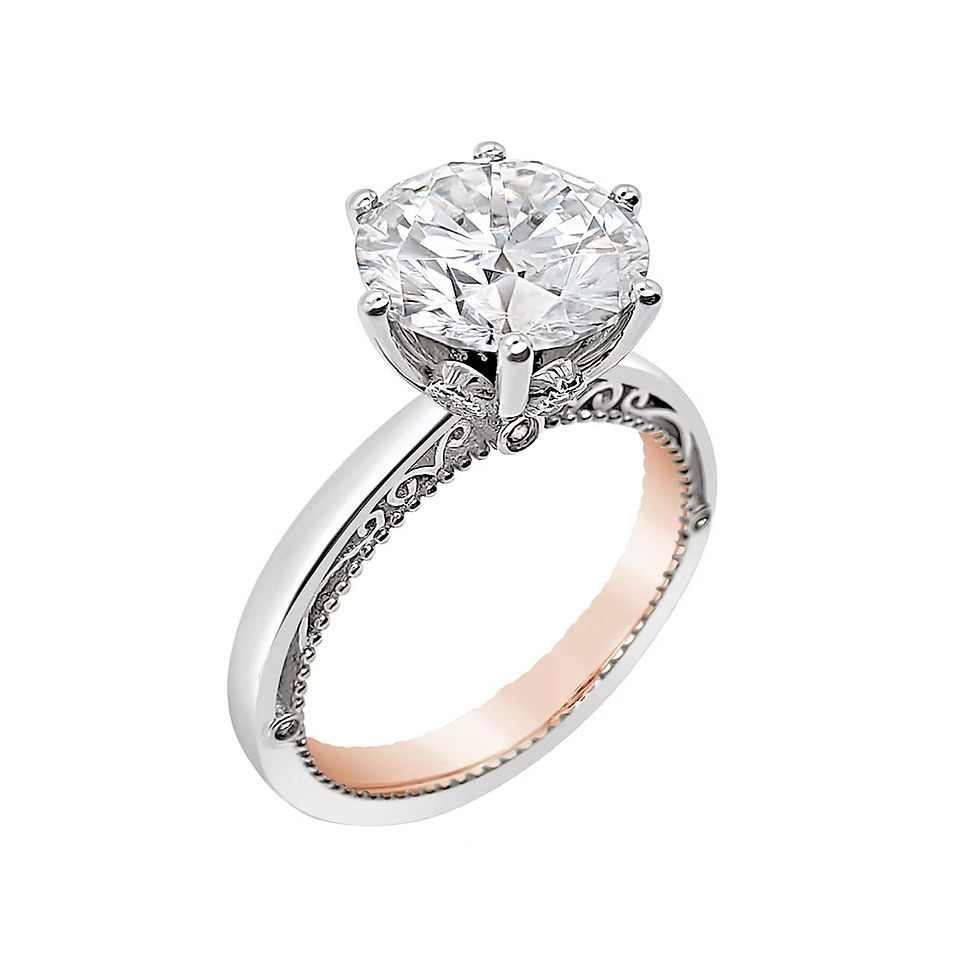
Vintage-style ring 600223: two-tone metal and openwork details extend around the sides and inside the setting.
Explore the RAGAZZA engagement ring collection for a starting design, or discuss metal colour, diamond shape, setting proportions and meaningful details through our custom-made and bespoke jewellery service. Personal elements work best when their shape, structure and comfort have been considered together.
How RAGAZZA brings diamond selection and craftsmanship together
RAGAZZA combines grading information, proportion analysis and visual inspection when selecting a diamond. Our proprietary DAII™ Diamond Quality Index brings together 16 data points to support comparisons of round diamonds. It helps explain proportion differences between stones with similar basic grades, and is used alongside independent laboratory reports and the assessment of the actual diamond. [5]
The process should answer practical questions: Why recommend one diamond over another with similar grades? What do its proportions, face-up size and transparency contribute? How will it look in the setting you prefer? Read about the DAII™ Diamond Quality Index, then bring your budget and preferences into the discussion with your consultant.
Design, manufacture and finished-piece inspection are part of the same decision. Diamond placement, accent-stone layout, prong finishing, polishing and overall proportions all contribute to the ring you receive. Our 11-point professional selection process and jewellery craftsmanship and quality checks explain how we approach those details.

Accent-stone setting, prong finishing and the details of the mount contribute to the quality of the complete ring.
Before confirming a purchase, record the diamond specification, metal, ring size, customisation details and agreed delivery date. Discuss cleaning, inspection and resizing arrangements as well. If you have a proposal date in mind, tell your consultant early so diamond selection, production and delivery can be planned around it.
Lab-grown diamond engagement ring FAQs

Ask about the diamond, complete quotation, ring size and resizing arrangements before choosing.
Do lab-grown diamond engagement rings sparkle more than natural diamond rings?
Sparkle depends on the diamond’s cut, proportions and actual quality. Origin alone does not decide which stone looks brighter. The budget flexibility of a lab-grown diamond gives you more stones and sizes to compare; assess each diamond’s appearance. [6]
How much does a 1 carat lab-grown diamond engagement ring cost?
Confirm the diamond’s quality, setting metal and design, and whether the price covers the complete ring. Start with a loose-diamond price, then add the chosen setting to obtain a meaningful quotation. Browse current diamond options or ask a consultant to prepare choices within your budget.
Does choosing GIA Premium remove the need to compare diamonds?
GIA Premium establishes defined quality thresholds, but diamonds in the same category can still differ in measurements and proportions. Compare their appearance and how they work with your setting. The best choice also depends on the shape and proportions you enjoy wearing. [2]
How can I choose a ring size for a surprise proposal?
Ask a consultant about measurement options and use a ring your partner wears on the same finger as a reference. Sizes can differ between hands and fingers, and height, weight or a photograph cannot give a reliable ring size. Our ring size guide can help you prepare; confirm whether your chosen design can be resized, the conditions and the time required.
Can a lab-grown diamond engagement ring be worn every day?
Suitable metal, secure settings and a comfortable fit support daily wear. Remove the ring for activities that expose it to impacts, and arrange regular cleaning and prong checks. If you notice a loose stone, deformation or unusual snagging, have it inspected before wearing it again. [4]
Choose a ring for the proposal and the years ahead
Choosing a lab-grown diamond engagement ring is a series of connected decisions: understand your partner’s preferences, compare the centre diamond’s quality and on-hand proportions, then consider the setting, finish and service arrangements. Thoughtful choices give you a ring to appreciate on the proposal day and throughout the years that follow.
A ring that suits personal taste and everyday life carries the meaning of the proposal into the years ahead.
Explore RAGAZZA engagement ring designs or choose a diamond to begin comparing options. For help understanding quality differences, arranging a fitting or discussing a bespoke ring, contact a RAGAZZA jewellery consultant. We will work from your budget, design preferences and proposal plans to help you create a considered, well-finished piece.
Sources
Original content by RAGAZZA Diamond. All rights reserved. No unauthorized reproduction or use.

Visit RAGAZZA for a one-on-one consultation with our experts to discover the quality of lab-grown diamonds.
Click Here for locations and bookings.


